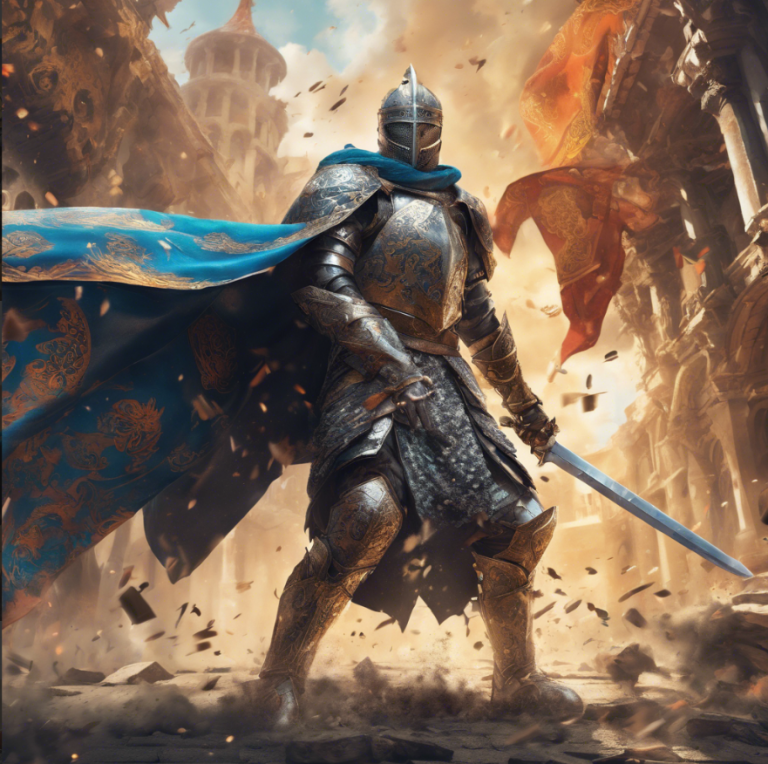
Furusiyyah and the Crusades: A Clash of Chivalric Cultures
Furusiyyah and the crusades; a clash of civilisation – or was it?
In this article will explore the difference and most importantly the similarities between the two great miliary entities!
Introduction to Furusiyyah and European Chivalry
Overview of European Chivalric Traditions
European chivalry, often romanticized in literature and art, was more than just a code of conduct; it was a cultural phenomenon that defined the medieval knight.
Emerging in the 9th century, chivalry integrated martial prowess with courtly virtues, emphasizing honor, loyalty, and protection of the weak.
Knights were expected to be skilled warriors, but they also had to adhere to a strict moral code, which included showing compassion and respect for women.
The concept of knighthood was deeply intertwined with feudalism. Knights served lords in exchange for land, which solidified their role in society.
This relationship was not merely transactional; it fostered camaraderie and mutual obligations among the nobility.
Courtly love, another pillar of chivalric culture, encouraged knights to act nobly toward their beloved, often idealizing women as paragons of virtue.
The Historical Context of the Crusades
The Crusades, starting in the late 11th century, marked a significant turning point in both European and Islamic history.
Medieval England played a crucial role in the Crusades, with knights and monarchs actively participating in the campaigns that sought to reclaim the Holy Land, significantly shaping the country’s military and cultural legacy.
France also played a pivotal role in the Crusades, providing both leadership and resources that shaped the course of these religious wars and the interactions between Christian and Muslim territories.
These religious wars aimed to reclaim Jerusalem from Muslim control, but they also facilitated unprecedented cultural exchanges between the East and West.
For many European knights, participating in a Crusade was a chance to demonstrate their bravery and earn glory, aligning perfectly with chivalric ideals.
During this period, the clash of arms and cultures would reveal stark differences and surprising similarities between European and Islamic traditions.
Both sides held deep-rooted values regarding honor in battle, yet their interpretations varied drastically.
As the Crusades unfolded, these encounters would set the stage for a unique interplay of chivalric traditions, ultimately leading to a rich tapestry of cultural exchange that influenced military tactics and ethical codes.
As knights prepared for battle, they faced not just an external enemy, but also a challenge to their understanding of honor and combat.
This dynamic would be crucial in shaping future interactions during the Crusades.
Pre-Crusade Chivalric Traditions – Furusiyyah & Crusaders

Islamic Furusiyyah: Martial Arts, Horsemanship, and Ethics
At the heart of Islamic culture lies furusiyyah, which embodies a profound commitment to martial excellence, horsemanship, and an ethical code that governs conduct on and off the battlefield.
This tradition emphasizes the importance of physical prowess through various martial arts, including swordsmanship, archery, and wrestling.
For warriors in the Islamic world, mastery over these skills was not merely a matter of personal honor but also a reflection of their dedication to their faith and community.
Horsemanship was equally crucial.
The horse was not only a mode of transportation but also a symbol of status and power.
Riders were trained to maneuver with agility and precision, showcasing both strength and grace.
Ethical considerations were central to furusiyyah; it emphasized bravery, loyalty, and respect for opponents, highlighting that a true warrior must uphold virtues even in conflict.
European Chivalry: Knighthood, Courtly Love, and Christian Values
On the European front, chivalry emerged as a blend of knightly conduct intertwined with courtly love and Christian values.
Knights were bound by a code that celebrated bravery, courtesy, and protection of the weak, especially women and the church.
This tradition was deeply rooted in feudalism, where knights served lords in return for land and titles.
The concept of courtly love added another layer, romanticizing the relationships between knights and noblewomen, fostering ideals of devotion and honor.
This cultural backdrop created a unique environment where martial skill was coupled with ethical behavior, though often influenced by the socio-political landscape of medieval Europe.
Comparison of Pre-Existing Traditions
When we analyze these two traditions side by side, striking similarities and differences emerge. Both cultures valued martial prowess and upheld ethical codes.
However, while furusiyyah integrated a holistic approach to martial arts and horsemanship, European chivalry placed considerable emphasis on courtly love and social hierarchy.
Despite these differences, the coming encounters during the Crusades would challenge and shape both traditions, leading to a fascinating exchange of ideas and practices.
This interaction laid the groundwork for the evolution of military tactics and cultural perceptions, setting the stage for what was to unfold in the years ahead.
Initial Encounters Between Furusiyyah and the Crusades

First Impressions and Cultural Shock
When European knights first encountered their Islamic counterparts during the Crusades, the cultural shock was palpable.
These warriors, steeped in their own traditions of chivalry and honor, found themselves face-to-face with a martial culture that was equally sophisticated but markedly different.
The swiftness and agility of Islamic cavalry contrasted sharply with the heavily armored European knights.
This initial encounter revealed not just differences in fighting styles but also a wide array of underlying philosophies.
The knights were astounded by the impressive horsemanship displayed by Islamic riders.
They executed maneuvers with an ease that seemed almost supernatural, showcasing skills honed through years of rigorous training in furusiyyah.
For many European knights, who were used to their own rigid formations and tactics, this fluidity was both intriguing and intimidating.
Battlefield Interactions and Observations of Fighting Styles
Battlefield interactions provided unique opportunities for observation and learning.
European knights noted the effectiveness of Islamic archery and speed in mounted combat.
In turn, Islamic fighters observed the heavy cavalry charges and disciplined formations of their opponents.
These exchanges were more than just skirmishes; they were lessons in adaptability and innovation.
Both sides began to adopt elements from one another’s techniques.
European knights experimented with lighter armor to increase mobility while Islamic forces started to incorporate strategies that emphasized formation and timing, akin to the European style.
Early Exchanges of Ideas and Practices
The clashes were not limited to physical confrontations; they sparked intellectual exchanges as well.
Captured knights often engaged in discussions about their respective codes of conduct and military strategies.
Such dialogues led to a mutual respect between some warriors as they recognized the honor inherent in each other’s practices.
These early interactions laid the groundwork for a fascinating blend of martial traditions.
Though rooted in distinct chivalric cultures, the experiences shared on the battlefield fostered a spirit of camaraderie, even amid conflict.
As these encounters unfolded, both sides began to reflect on their values and methods, setting the stage for further evolution in chivalric codes and military tactics.
Cross-Cultural Influences on Military Tactics

Adoption of Islamic Cavalry Techniques by European Knights
As the Crusades progressed, European knights began to admire and adopt various Islamic cavalry techniques.
The agility and speed of Islamic horsemen were strikingly different from the more rigid formations typical of European knights.
This admiration led to a gradual integration of these techniques into European warfare.
Knights observed how Islamic riders utilized lighter armor for mobility, which allowed them to execute swift maneuvers.
They mastered the art of mounted archery, combining it with their own combat styles.
As a result, European cavalry tactics evolved, incorporating hit-and-run strategies that emphasized speed and flexibility over sheer brute force.
In both Furusiyyah and Crusader traditions, honor was a defining principle that governed the conduct of the warrior class, emphasizing the importance of valour on the battlefield.
During the Renaissance, castles became symbols of this military chivalry, serving not only as fortifications but also as centers of cultural exchange.
As knights from both cultures clashed, their shared ideals of honor and bravery shaped their identities, reflecting a rich tapestry of chivalric values that transcended their differing backgrounds.
Influence of European Siege Warfare on Islamic Defenses
Conversely, the Crusaders brought their own experiences in siege warfare to the Islamic world.
The construction of massive stone fortifications was a hallmark of European military architecture, designed to withstand prolonged assaults.
Islamic defenders had to adapt quickly to counter these new siege methods, leading to innovations in their own military engineering.
The introduction of siege engines, like trebuchets, changed the dynamics of warfare on both sides.
Islamic forces learned to reinforce their walls and develop counter-siege tactics, blending their traditional approaches with European advancements.
This cross-pollination of ideas not only fortified defenses but also created a more dynamic battlefield environment.
Evolution of Armor and Weaponry
The encounters during the Crusades significantly influenced the evolution of armor and weaponry.
As knights faced Islamic warriors equipped with distinct weapons such as curved sabers and lances, they began to adapt their own gear.
European armor became increasingly refined, incorporating designs that provided better protection while allowing greater mobility, reflecting the influence of Islamic designs.
Similarities between Furusiyyah and Germanic warrior traditions highlight their shared emphasis on codes of honor, martial prowess, and the significance of chivalric values in their respective cultures.
Moreover, the mixing of weaponry styles led to the creation of hybrid arms that combined features from both cultures.
The crossbow, for instance, gained popularity among Islamic forces, while European knights began utilizing scimitars alongside their traditional swords.
This blending of military tactics, strategies, and equipment laid the groundwork for a more sophisticated approach to warfare, one that would continue to evolve long after the last crusade.
The impact of these exchanges extended beyond the battlefield, shaping the ethical codes of both cultures and influencing their respective chivalric traditions.
Chivalric Codes and Ethics in Conflict
Comparison of Islamic and Christian Warrior Ethics
At the heart of both Islamic furusiyyah and European chivalry lies a set of ethical principles guiding warriors in their conduct.
Islamic ethics emphasized virtues like bravery, honor, and justice. A Muslim warrior was expected to uphold these values not just in battle but in all aspects of life.
The concept of ‘jihad,’ often misunderstood, included the idea of striving for moral excellence alongside physical combat.
Conversely, European chivalric codes were steeped in courtly love, loyalty to one’s lord, and protection of the weak.
Knights swore oaths of fealty, intertwining their martial duties with social responsibilities.
The ideals of knighthood also included a strong sense of honor, with a knight’s reputation often depending on his conduct both on and off the battlefield.
Impact of Religious Differences on Chivalric Ideals
The religious backgrounds of these two traditions significantly shaped their respective chivalric ideals.
For example, the Islamic perspective often saw warfare as a means to promote justice and defend the faith.
This notion frequently drew from the Quranic teachings that emphasize righteousness and the greater good.
On the other hand, the Christian framework viewed warfare through the lens of holy duty, with the Crusades providing a context where martial actions were framed as a divine mission.
This ultimately led to a dichotomy in how each side approached conflict and honor.
Adaptations and Compromises in Battlefield Conduct
As the Crusades unfolded, both sides found themselves adapting their ethical frameworks in response to one another.
For instance, there were instances where European knights began to recognize the value of mercy in certain situations, influenced by the honorable conduct of their Islamic counterparts.
Similarly, Islamic warriors sometimes adopted elements of European strategy that emphasized tactical ingenuity over sheer force.
These adaptations created a unique space where the lines between the two chivalric cultures blurred, leading to moments of mutual respect and understanding even amidst the chaos of battle.
As warriors exchanged not only blows but also ideas about honor and conduct, these cultural intersections paved the way for richer dialogues around chivalry and ethics that would influence future generations.
This rich tapestry of ethical considerations and adaptations laid the groundwork for further cultural exchanges that transcended the battlefield, engaging with literature, art, and broader societal norms.
The evolving landscape of these warrior ethics would continue to shape interactions long after the clashes of swords had faded.
Cultural Exchange in Literature and Art

Influence of Islamic Poetry and Romantic Literature on European Troubadours
The cross-cultural interaction during the Crusades greatly influenced literature, particularly through the exchange of poetic forms. Islamic poetry, with its intricate metaphors and emotional depth, captivated many European troubadours.
These poets began to incorporate themes of courtly love and chivalric ideals into their works, blending the romantic traditions of both cultures.
The tales of knights and their noble quests found inspiration in the lyrical expressions of longing and devotion prevalent in Arabic verse.
This fusion led to a rich tapestry of storytelling that combined the valor of the knight with the enchanting allure of courtly love, creating a unique literary phenomenon in medieval Europe.
Depictions of the ‘Other’ in Art and Illuminated Manuscripts
Art from this period also reflects these cultural exchanges, particularly in the way it depicted the ‘other’—the Muslim warrior or noble.
Illuminated manuscripts often showcased these figures not just as enemies but as dignified opponents.
Artists began to portray Islamic motifs alongside traditional Christian symbols, revealing a nuanced understanding of each culture.
These artistic representations served to humanize the adversary, fostering a sense of respect that echoed the mutual admiration seen on the battlefield.
The blending of styles, colors, and themes in these works illustrated the complexity of interactions between the two cultures.
Shared Motifs and Symbols in Chivalric Iconography
Chivalric iconography also saw significant overlap, with shared motifs symbolizing honor, bravery, and love.
Both cultures valued similar qualities in their warriors, leading to common symbols that transcended religious boundaries.
For instance, the image of the horse, a vital element in both furusiyyah and European chivalry, became a powerful emblem of nobility and martial prowess.
As knights and warriors exchanged stories and practices, their respective artistic traditions began to reflect this synthesis.
Over time, this convergence enriched both Islamic and European art, creating a legacy that celebrated the intertwined histories of these two great civilizations.
This cultural dialogue laid the foundation for future exchanges, enriching the literary and artistic landscapes of Europe and the Islamic world alike.
As these traditions continued to evolve, they would set the stage for further exploration of martial ethics and the lasting impact of these encounters.
Evolution of Furusiyyah Post-Crusades
The aftermath of the Crusades marked a transformative period for furusiyyah, as Islamic martial practices began to blend with European influences.
This cultural fusion was not merely transactional; it evolved into a rich dialogue that shaped both traditions profoundly.
Incorporation of European Elements into Furusiyyah Practices
As Islamic warriors encountered European knights, they observed various techniques and practices that were effective on the battlefield.
The agility and speed of European cavalry tactics caught the attention of Muslim commanders.
They began integrating these strategies into their own training regimens. For example:
- Cavalry Maneuvers: The use of mounted charges, previously emphasized in furusiyyah, gained new dimensions through European approaches.
- Weapon Techniques: European swordsmanship styles introduced different grips and strikes that Islamic fighters adapted to their own combat scenarios.
- Tactical Formations: The organization of troops during engagements saw enhancements, allowing for more coordinated assaults.
Long-Term Impact on Islamic Martial Arts and Horsemanship
The synthesis of these practices had lasting effects on the evolution of Islamic martial arts. It led to the development of hybrid techniques that improved overall combat effectiveness.
Not only did horsemanship flourish, but it also became enriched with new styles of riding and equipment.
- Equestrian Skills: The incorporation of the European saddle design allowed for greater stability and maneuverability during combat.
- Martial Arts Schools: New schools of thought emerged, blending traditional furusiyyah with European methods, attracting students from diverse backgrounds.
- Armour: Furusiyyah armor, characterized by its intricate designs and practical functionality, reflected the ideals of chivalry and protection in medieval Islamic warfare, blending artistry with combat readiness.
Synthesis of Traditions in Border Regions and Multicultural Societies
Regions along the borders of Islamic and European empires became melting pots of these chivalric traditions.
In places where cultures met, such as Spain and Sicily, the intermingling of ideas led to unique interpretations of martial ethics and practices.
- Shared Festivals: Events celebrating horsemanship and martial prowess often showcased a mix of Islamic and European styles.
- Cultural Exchange: Communities engaged in trade and diplomacy found common ground in their chivalric values, leading to a more profound mutual respect and understanding.
This blending of traditions highlighted the dynamic nature of martial cultures.
As furusiyyah continued to evolve, it reflected the complexities of identity and values shaped by centuries of interaction.
The next chapter will delve deeper into how these cultural exchanges influenced literature and art, illuminating the rich tapestry of shared inspirations that arose from this historical dialogue.
Legacy and Modern Interpretations

Lasting Influence on Martial Traditions
The legacy of furusiyyah and European chivalry continues to resonate through modern martial traditions.
In the Middle East, remnants of furusiyyah are evident in various martial arts that emphasize horsemanship and combat skills.
Practices like equestrian archery and traditional fencing maintain the essence of furusiyyah while adapting to contemporary contexts.
In Europe, interest in historical martial arts has surged, with many practitioners studying medieval swordsmanship and mounted combat.
This resurgence reflects a recognition of the shared heritage between Islamic and European martial traditions.
Both cultures have drawn from each other’s techniques, leading to a rich tapestry of combat knowledge that informs modern practices.
Contemporary Understanding of Furusiyyah
Today, furusiyyah is seen not just as a collection of martial skills but as an ethical framework guiding conduct in conflict.
Practitioners emphasize honor, respect, and the importance of self-discipline.
These values echo the original principles of furusiyyah, fostering a sense of community and responsibility among modern martial artists.
Moreover, the celebration of furusiyyah in cultural events highlights its significance.
Festivals and competitions showcase traditional skills while promoting intercultural dialogue.
These gatherings serve as reminders of the intertwined histories and shared values that enrich both Eastern and Western perspectives.
Reflections on Cultural Dialogue
The interactions between furusiyyah and European chivalry during the Crusades laid the groundwork for ongoing cultural exchange.
This dialogue has fostered a deeper understanding of each culture’s values and practices.
Today, as societies grapple with identity and heritage, the fusion of these traditions offers insights into cooperation and mutual respect.
Ultimately, the legacies of furusiyyah and European chivalry remind us of our interconnected past.
They encourage us to look beyond differences and appreciate the shared human experiences that shape our world today.