Furusiyyah’s Last Stand: How Gunpowder and Modern Warfare Changed the Game
The Golden Age of Furusiyyah
Hello knights, today we will be discussing Furusiyyah’s last stand! How Gunpowder and Modern Warfare Changed the Game!
If you are a regular reader than you will know that Furusiyyah, the art of horsemanship and mounted warfare, was a cornerstone of medieval Islamic military culture.
This martial discipline encompassed more than just riding; it involved a complex blend of skills, strategies, and traditions that defined the effectiveness of Islamic armies during their peak.
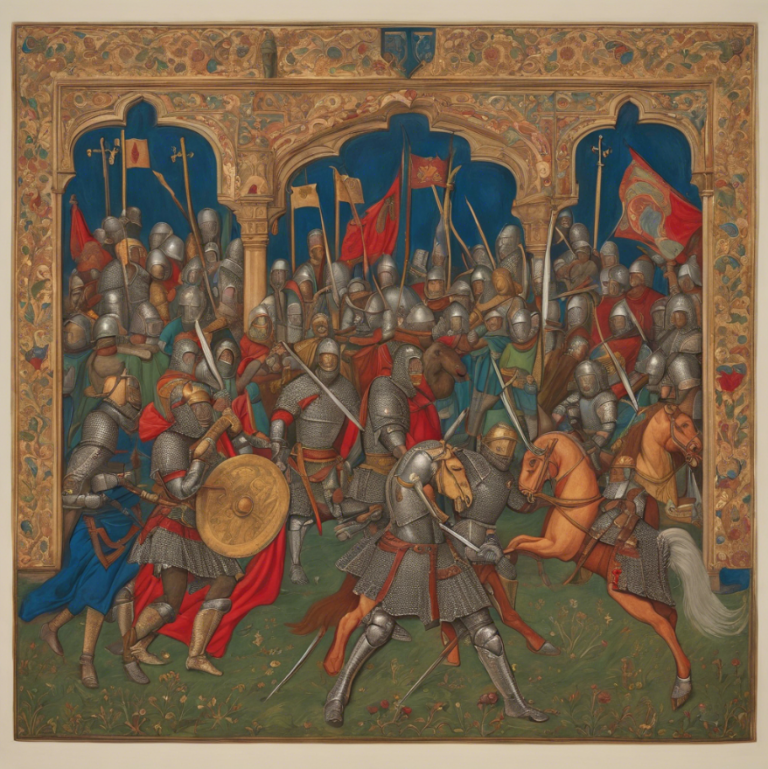
The Golden Age of Furusiyyah marked a period of exceptional development in martial training and the chivalric ideals of the medieval warrior.
During this era, the introduction of firearms profoundly transformed traditional combat practices. While archery and mounted combat were once the hallmarks of knightly prowess, firearms shifted the focus towards ranged warfare, altering the dynamics of battles.
As gunpowder weapons became more prevalent, knights and warriors adapted their training to incorporate the use of handguns, cannons, and grenades.
However, this evolution also led to the gradual decline of the traditional Furusiyyah military way, as the emphasis on individual skill and chivalric values gave way to a more strategic, firepower-centric approach.
The rise of firearms diminished the role of heavily armored knights, who could be outmatched by ranged attacks.
This shift not only transformed battlefield tactics but also redefined the identity of the warrior, blending the valor of the past with the realities of modern weaponry, ultimately marking the end of an era in martial culture.
Definition and Importance of Furusiyyah in Medieval Islamic Warfare

At its core, furusiyyah was about mastering the relationship between horse and rider.
In an era where cavalry often dictated the outcome of battles, this discipline became crucial.
It was not merely a means of transportation; it transformed knights into formidable warriors who could maneuver swiftly on the battlefield, execute tactical charges, and engage in close combat with agility.
The importance of furusiyyah extended beyond military prowess.
It symbolized honor, courage, and nobility.
Knights were celebrated for their skills in both combat and equitation, making furusiyyah integral to one’s identity and status within society.
Key Elements of Furusiyyah Training and Practice
Training in furusiyya was rigorous and multifaceted.
Young warriors typically began their education early, learning the essentials of horse care, riding techniques, and weapon handling. The training included:
- Riding Techniques: Mastery over different gaits and styles, which allowed soldiers to adapt to various terrains and situations.
- Combat Skills: Proficiency in using weapons like the lance, sword, and bow while mounted.
- Group Tactics: Learning to work in formations, which was essential during large-scale battles.
- Archery: Archery was a vital skill in Furusiyyah training, emphasizing precision, discipline, and the ability to engage enemies from a distance. The bow and arrow served as essential weapons in medieval warfare, combining speed and accuracy to overcome armored foes.
- Castles: Castles represented fortified strongholds, providing strategic advantages in defense and serving as training grounds for knights and archers alike.
- Spear: The spear was a fundamental weapon in Furusiyyah training, valued for its versatility in both ranged and melee combat, allowing for effective defense and offense.
This comprehensive training ensured that mounted warriors were not only skilled riders but also strategic thinkers capable of responding to the chaos of battle.
The Role of Mounted Warriors in Medieval Islamic Armies
Mounted warriors were the backbone of medieval Islamic armies.
Their mobility allowed for rapid advances and retreats, making them invaluable in both offensive and defensive manoeuvres.
The cavalry could outflank enemy forces and penetrate deeper into enemy territory, disrupting supply lines and communication.
Moreover, the psychological impact of a well-trained cavalry unit cannot be underestimated.
The sight of a disciplined formation of mounted warriors charging towards the enemy could instill fear and uncertainty, often leading to a swift victory even before the first blow was struck.
The Advent of Firearms

Introduction of Gunpowder Weapons in Warfare
The arrival of gunpowder weapons marked a seismic shift in the landscape of medieval warfare.
As technology evolved, the introduction of firearms began to challenge the traditional prowess of mounted warriors, who had long been the backbone of armies trained in furusiyya.
No longer was the battlefield dominated solely by the valor of knights charging on horseback; now, a new player had entered the arena.
Early Firearms and Their Impact on Traditional Combat
Early firearms, including hand cannons and muskets, were rudimentary compared to modern standards, yet they brought about significant changes in combat dynamics.
Instead of relying solely on skillful horsemanship and swordplay, armies now had to contend with the devastating power of bullets.
- The psychological impact of firearms cannot be understated.
- Soldiers on foot wielding muskets could deliver deadly volleys that completely altered the way battles were fought.
- Cavalry units, once seen as invincible, found themselves vulnerable to these new weapons.
The effectiveness of cavalry charges diminished as infantry formations developed to counteract mounted attacks.
Shift in Military Technology and Its Implications for Cavalry
With the rise of firearms came a transformational shift in military technology. The artillery became crucial in sieges and open-field battles, forcing cavalry units to rethink their strategies.
- Armies began to prioritize infantry over cavalry, leading to a reorganization of forces.
- Cavalry tactics had to adapt, focusing more on mobility and less on direct charges against fortified positions or concentrated infantry lines.
This evolution signalled the beginning of the end for traditional cavalry dominance in warfare.
The following arms had the most effect:
Gunner: The gunner played a crucial role in battlefield tactics, skillfully operating artillery and firearms to support infantry operations.
Rocket: Rockets were innovative weaponry in Furusiyyah warfare, offering explosive capabilities that could target fortifications and enemy troops from afar.
Charcoal: Charcoal was a key ingredient in gunpowder production, providing the necessary fuel for combustion in early firearms and explosives.
Potassium Nitrate: Potassium nitrate was essential in creating gunpowder, acting as an oxidizer that facilitated the rapid combustion needed for projectile weapons.
Saltpeter: Saltpeter, another name for potassium nitrate, was critical for producing gunpowder, significantly enhancing the lethality of medieval warfare.
Gunpowder Firearms: Gunpowder firearms changed the landscape of warfare, offering greater range and firepower compared to traditional melee weapons.
Grenades: Grenades introduced explosive projectiles that could be thrown into enemy formations, creating chaos and inflicting damage from a distance.
Field Cannons: Field cannons provided mobile artillery support, capable of delivering devastating firepower on the battlefield and altering the dynamics of engagements.
Cannon Balls: Cannon balls were the primary ammunition for cannons, designed to cause maximum destruction to fortifications and enemy troops when fired.
Bayonets: Bayonets transformed firearms into versatile melee weapons, bridging the gap between ranged and close combat in evolving military tactics.
And eventually:
Handgun: The handgun revolutionized personal combat, allowing individuals to wield powerful ranged weapons that could penetrate armor.
As the balance of power shifted toward those armed with gunpowder, the skilled practices of furusiyya, which emphasized mounted combat, started to lose their relevance.
Changing Military Tactics

The introduction of firearms into the battlefield dramatically reshaped military strategies.
Armies could no longer rely solely on the traditional cavalry charges that had dominated medieval warfare for centuries.
Instead, a new approach was necessary to adapt to the evolving landscape of combat.
Evolution of Battlefield Strategies
As gunpowder weapons like muskets and cannons became commonplace, commanders quickly recognized the need to rethink their tactical frameworks.
Infantry units began to take center stage in battle formations.
The once-feared cavalry charges, which relied heavily on speed and surprise, faced significant challenges from these new weapons.
Gunpowder weaponry allowed infantry to deliver firepower from a distance, making it increasingly risky for mounted troops to close in on enemy lines.
This shift led to the rise of strategies that prioritized massed ranks of foot soldiers, who could unleash volleys of gunfire at advancing foes.
Decline in the Effectiveness of Cavalry Charges
With the advent of firearms, the effectiveness of cavalry charges saw a marked decline.
What was once a decisive tactic turned into a high-risk manoeuvre, as horsemen were now vulnerable to concentrated gunfire.
Battles that previously showcased the glory of mounted warriors now highlighted the brutal efficiency of infantry-led assaults.
Commanders began to see the value in forming battalions that could withstand and respond to cavalry attempts.
These formations often featured a mix of soldiers equipped with polearms and firearms, allowing them to counter any incoming charge effectively.
Rise of Infantry-Based Formations and Tactics
The transition to infantry-based tactics didn’t just mean packing more foot soldiers onto the field.
It involved innovating how they were organized and how they interacted during combat.
Military leaders started implementing formations like the line or column, which maximized the firing capability of their troops while minimizing exposure to enemy fire.
Furthermore, this shift encouraged the development of support roles within armies, such as artillery units that could provide long-range fire support.
Combined arms tactics emerged, where infantry, artillery, and even remnants of cavalry worked together harmoniously to create a balanced and formidable fighting force.
This evolution of tactics marked a pivotal moment in military history, moving away from an era dominated by furusiyya towards a new realm of warfare.
The Obsolescence of Traditional Cavalry

The rise of gunpowder weapons drastically changed the landscape of warfare, leading to a diminishing role for mounted warriors in the battlefield.
Traditionally, cavalry units were the backbone of military forces, celebrated for their speed and striking power.
However, as the effectiveness of firearms grew, the strategies that once elevated cavalry began to falter.
Diminishing Role of Mounted Warriors in Modern Warfare
As armies adopted firearms, the advantages of cavalry became less pronounced.
The sheer firepower of infantry units armed with guns made it increasingly difficult for cavalry charges to break through enemy lines.
Instead of relying on the swift mobility of horsemen, commanders began to prioritize formations that emphasized massed infantry fire.
This shift meant that mounted warriors, who had once been elite fighters, were now often relegated to supporting roles or even rendered obsolete.
Adaptation of Cavalry Units to New Military Realities
Despite the challenges posed by new technologies, cavalry did not vanish entirely.
Instead, military leaders sought ways to adapt these forces to the changing realities of warfare.
Some cavalry units transitioned into reconnaissance roles, leveraging their mobility for scouting missions.
Others evolved into shock troops, using their speed to outflank or harass enemy formations.
This adaptation reflected an understanding that while traditional cavalry tactics were declining, there was still value in the unique capabilities that mounted soldiers offered.
Gradual Phasing Out of Furusiyyah Practices in Military Training
As firearms became central to military strategy, the rigorous training and practices associated with furusiyyah gradually diminished.
Once essential for preparing mounted warriors for combat, these techniques began to lose relevance.
The focus shifted towards firearms training, battlefield tactics, and coordinating infantry maneuvers.
Although remnants of furusiyyah persisted in certain cultural contexts, its practical application in military training saw a significant decline, marking the end of an era where horsemanship was synonymous with martial prowess.
The evolution of military technology and tactics reshaped the very fabric of warfare, leaving behind the legacy of traditional cavalry.
Cultural and Social Impacts

Shift in Societal Perceptions of Martial Arts and Horsemanship
As the dominance of cavalry began to wane with the advent of firearms, societal views on martial arts and horsemanship underwent a significant transformation.
In medieval times, furusiyyah was celebrated as a vital skill set for warriors.
It encompassed not just combat techniques but also emphasized the bond between horse and rider.
The mounted warrior was a symbol of prestige, valor, and nobility.
However, as gunpowder weapons took center stage, the perception of these once-revered skills shifted.
The emphasis moved away from mastering horsemanship and traditional martial arts towards understanding firearms and infantry tactics.
This transition marked a decline in public interest in equestrian arts, as societies prioritized proficiency in handling guns over the graceful skills of riding and swordplay.
Transformation of Furusiyyah from Military Necessity to Cultural Tradition
While furusiyyah practices faced obsolescence in military contexts, they found new life as cultural traditions.
Communities began preserving the legacy of horsemanship through festivals, performances, and competitions.
Equestrian sports emerged, blending the historical aspects of furusiyyah with modern entertainment.
These transformations allowed furusiyyah to evolve from a necessity for survival on the battlefield to an art form celebrated in cultural heritage.
Riding schools and martial arts dojos often incorporate elements of furusiyyah, allowing enthusiasts to connect with their historical roots while adapting to contemporary practices.
This cultural shift has resulted in a renewed appreciation for the skills once crucial for warfare, albeit in a different context.
Preservation Efforts and Modern Interpretations of Furusiyyah
Today, various organizations and enthusiasts are dedicated to preserving the essence of furusiyyah.
Workshops, seminars, and reenactments help keep the traditional techniques alive.
These efforts not only honor the past but also provide valuable lessons in discipline, athleticism, and strategy that resonate with modern audiences.
Modern interpretations of furusiyyah draw from its rich history while incorporating contemporary training methods.
This blend ensures that while the military applications may have faded, the cultural significance persists.
Through these initiatives, furusiyyah continues to inspire new generations, reminding us of the profound connections between history, culture, and the evolving nature of warfare.
Furusiya after Firearms -Legacy and Modern Relevance

Influence on Equestrian Sports and Martial Arts
Furusiyyah has undergone a fascinating transformation, evolving from its battlefield roots into a significant influence on modern equestrian sports and martial arts.
Today, many disciplines draw inspiration from the techniques and philosophies of furusiyyah, showcasing the agility, discipline, and skill that were once vital in combat scenarios.
·Equestrian Sports: Many modern equestrian events celebrate the horsemanship skills that furusiyyah emphasized. Disciplines like dressage and show jumping reflect the training and bond between horse and rider that furusiyyah instilled. Events often echo the complex maneuvers required by mounted warriors, highlighting the elegance and precision developed through historical practices.
·Martial Arts: Various martial arts have integrated elements of furusiyyah, emphasizing mounted combat techniques and the strategic mindset that was essential for success on the battlefield. These adaptations not only preserve the martial heritage but also offer practitioners a glimpse into a rich cultural past.
Continued Significance in Cultural Identity and Heritage
As societies evolve, so too do their interpretations of tradition.
Furusiyyah has been embraced as a crucial aspect of cultural identity, particularly in regions with deep historical ties to equestrianism.
·Cultural Festivals: Events celebrating furusiyyah often feature reenactments, workshops, and competitions. These gatherings serve as a reminder of the shared heritage, fostering community spirit while educating younger generations about their ancestors’ lifestyles.
·Art and Literature: The themes of furusiyyah continue to inspire artists and writers, contributing to a narrative that honors the valor and skill of the mounted warriors of old. This storytelling keeps the principles of furusiyyah alive in contemporary culture, ensuring that they are not forgotten.
Lessons for Contemporary Military Adaptations
The decline of furusiyyah offers valuable insights for modern military strategies and adaptations.
·Adaptability: Just as cavalry units had to adapt to the rise of firearms, today’s military forces must remain agile in the face of technological advancements. The ability to pivot tactics based on new realities is a lesson well learned from the history of furusiyyah.
·Integration of History: Understanding the evolution of warfare, including the significance of furusiyyah, can inform current military training and operational planning. Recognizing the strengths and weaknesses of past practices can help shape effective strategies for future engagements.
The legacy of furusiyyah endures, transforming into a celebration of cultural heritage and martial skill while providing lessons for the present and future.