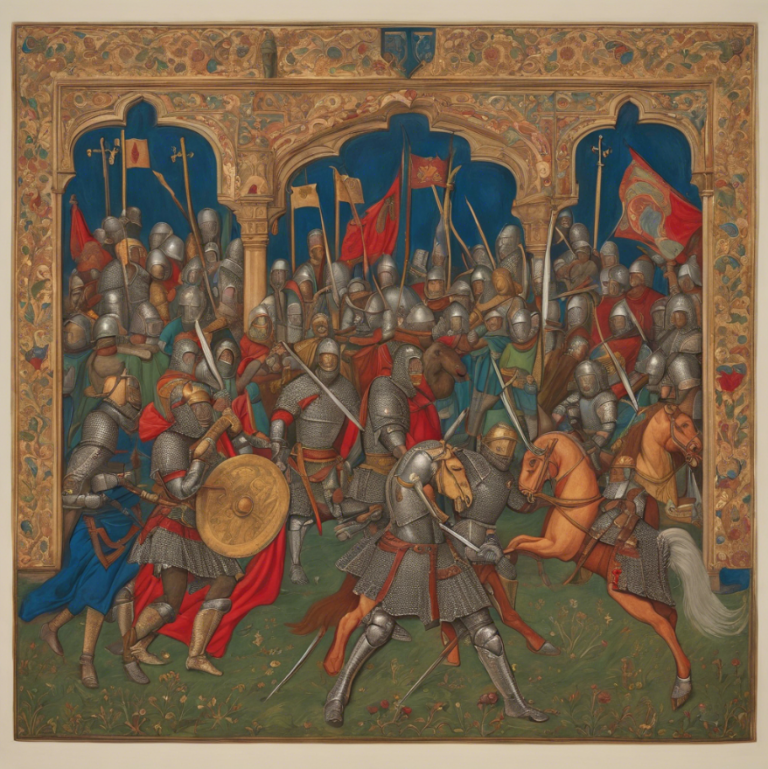
The Evolution of Furusiyyah: Key Elements Borrowed from Persian and Byzantine Military Traditions
Welcome back history buffs, so as part of our birth of furusiyyah series, today’s article is all about the evolution of furusiyyah.
However let’s First jump into a brief introduction to furusiyyah.
Introduction to Furusiyyah
Furusiyyah holds a significant place in Islamic military culture, embodying the art of horsemanship and martial skills.
This tradition not only shaped the Islamic armies but also influenced their societal structures and values.
At its core, furusiyyah represents more than mere combat; it is about developing a warrior’s character, discipline, chivalry and honor.
Importance in Islamic Military Culture
The significance of furusiyyah and it’s evolution in Islamic military culture cannot be overstated.
It served as a vital component in training effective cavalry units, which were essential for battle strategies and territorial expansion.
The emphasis on equestrian skills was rooted in the historical context of the Arabian Peninsula, where mobility and agility played crucial roles in warfare.
As a result, mastering horsemanship became synonymous with nobility and bravery, reflecting the values of a warrior class revered in Islamic society.
Furthermore, furusiyyah was instrumental in establishing a sense of identity among Muslim warriors.
It fostered camaraderie and unity within ranks, promoting loyalty and dedication to the cause.
This collective ethos of chivalry contributed to the Islamic conquests that would later shape vast empires.
Overview of Persian and Byzantine Influences
The evolution of furūsiyya was significantly impacted by the rich military traditions of the Persian and Byzantine empires.
The Persian influence introduced advanced cavalry techniques, such as horseback archery and light cavalry tactics, which enhanced the effectiveness of Islamic forces.
Persian-style horse armor and equipment set standards for protection and mobility in battle.
On the other hand, Byzantine military strategies also played a pivotal role.
Their fortification techniques and siege warfare tactics provided crucial insights into defensive and offensive maneuvers.
The integration of Byzantine-inspired military formations added another layer of sophistication to Islamic military practices.
Persian Cavalry Techniques

The Persian influence on Islamic military culture is profound, particularly in the realm of cavalry techniques.
The key aspects were horseback archery, light cavalry tactics, and the distinctive horse armor and equipment that shaped the furūsiyya tradition.
Horseback Archery
One of the most significant contributions from Persian military practices was the art of horseback archery.
Persian cavalry were adept at shooting arrows while in motion, which provided them with a substantial advantage in battle.
This technique allowed riders to strike swiftly and retreat before enemies could counter.
The use of composite bows, designed for maximum power and accuracy, became integral to this practice.
These bows were crafted from materials like wood, horn, and sinew, making them both lightweight and incredibly effective.
Light Cavalry Tactics
Alongside horseback archery, light cavalry tactics played a crucial role in shaping Furusiyyah.
Persian light cavalry was known for their speed and agility, allowing them to maneuver easily on the battlefield.
They employed hit-and-run strategies, striking hard and fast before disappearing into the terrain.
Early Europe struggled with such tactics as this approach not only confused larger enemy formations but also minimized risk to their own forces.
Horse Armor and Equipment
The effectiveness of the Persian cavalry was further enhanced by their unique horse armor and equipment.
Persian-style horse armor, often made from leather and metal, protected the horses while allowing for mobility.
This armor typically covered vital areas without hindering movement, enabling cavalry to maintain their speed and agility during combat.
Additionally, the incorporation of ornate saddles and bridles added both functionality and prestige to the cavalry units.
As Furusiyyah evolved, these elements helped forge a distinct identity for Islamic military cavalry.
The impact of Persian techniques would resonate through the ages, influencing not just tactics but also the broader cultural landscape of military engagement.
With a solid foundation laid by Persian cavalry techniques, next up is Byzantine military strategies.
Byzantine Military Strategies

Adaptation of Byzantine Fortification Techniques
The strength of the Byzantine military was not just in its warriors but also in the structures that protected them.
The Islamic forces took note of the impressive fortifications built by the Byzantines.
These fortifications often included thick walls, strategic towers, and moats that made cities difficult to penetrate.
The adaptation of these techniques allowed Islamic armies to build stronger defenses against invasions and sieges.
By employing similar designs, they fortified their own cities, enhancing their security and providing a solid base for military operations.
This adaptation gave them a tactical advantage, ensuring that they could withstand prolonged attacks.
Implementation of Byzantine Siege Warfare Tactics
Siege warfare was an area where the Byzantines excelled.
They developed specialized tactics and equipment to breach fortified positions.
The Islamic military adopted these siege techniques, learning to use battering rams, siege towers, and catapults effectively.
Moreover, they understood the importance of logistics during a siege—ensuring they had sufficient supplies and reinforcements.
This knowledge transformed their approach to warfare, allowing them to lay successful sieges against well-defended cities and strongholds.
Integration of Byzantine-Inspired Military Formations
The Byzantine army was known for its disciplined formations, which played a significant role in their victories on the battlefield.
The Islamic military incorporated these formations into their own strategies.
One notable example is the use of shield walls and layered units that allowed for both offense and defense.
This integration improved coordination among troops and enhanced combat effectiveness.
The emphasis on discipline and organization helped Islamic forces to operate more cohesively, leading to numerous successful engagements.
These adaptations from Byzantine strategies significantly shaped the Islamic military landscape.
As they continued to evolve, the blending of these techniques laid the groundwork for a formidable military tradition that would thrive in the region.
Training and Education for Muslim Knights

The military training and education within the context of furusiyyah reflects a remarkable fusion of Persian and Byzantine methodologies.
This blend significantly enhanced the effectiveness of Islamic forces, ensuring they were well-prepared for various battlefield scenarios.
Fusion of Training Methods
Islamic military training adopted several key aspects from both Persian and Byzantine practices.
From the Persians, there was an emphasis on horseback archery and swift cavalry maneuvers.
This allowed soldiers to become adept at shooting while mounted, a skill that proved invaluable in battle.
On the other hand, the Byzantines contributed structured discipline and strategic thinking to military training.
Their rigorous training regimens included extensive drills that focused on formations and coordination, which helped to create an organized and effective fighting force.
Development of Military Academies for Islamic Knights
As the Islamic military evolved, so did its approach to education.
The establishment of comprehensive military academies became essential.
These institutions served as centers for both physical training and intellectual development.
Officers and soldiers alike received instruction not only in combat techniques but also in tactics, strategy, and even history.
This holistic educational model ensured that the military was not just physically capable but also mentally prepared for the complexities of warfare.
Emphasis on Skills for Arab Faris Knights
A significant aspect of the training involved emphasizing both physical and intellectual skills.
Soldiers were trained in various disciplines such as horsemanship, weapon handling, and battlefield tactics.
Concurrently, they were encouraged to study military literature, which included historical accounts and strategies from past conflicts.
This dual focus fostered a generation of leaders who were not only skilled in combat but also capable of critical thought and strategic planning.
The impact of these training methodologies laid a strong foundation for the future of Islamic military capabilities.
Understanding how these elements combined will lead us to explore the evolution of weapons and equipment, where different influences further shaped the Islamic military landscape.
Weapons and Equipment Developed by Middle Eastern Knights

The evolution of weapons and equipment in the context of furusiyyah reflects a fascinating blend of Persian and Byzantine military innovations.
This fusion not only enhanced the effectiveness of Islamic forces but also laid the groundwork for a unique identity within the military culture.
Adoption of Persian Composite Bows
One of the standout features of Persian military technology was their composite bows.
These bows, crafted from wood, horn, and sinew, allowed for greater power and range compared to simple wooden bows.
The adoption of these composite bows into Islamic warfare transformed archery on the battlefield.
- Enhanced range and accuracy made Persian composite bows a formidable weapon.
- Archers could shoot arrows with greater force while on horseback, allowing for effective horseback archery that complemented the fast-moving cavalry tactics.
Incorporation of Byzantine-Style Heavy Armor
While Persian light cavalry techniques excelled in agility, the Byzantine influence brought a new dimension with heavy armor.
The Byzantines were known for their cataphracts—heavily armored cavalry that could withstand significant punishment during battles.
- The integration of Byzantine-style heavy armor provided Islamic cavalry with increased protection.
- This shift created a balance between speed and defense, allowing for more versatile engagements on the battlefield.
Fusion of Persian and Byzantine Weapon Designs
The blending of Persian and Byzantine weapon designs marked a significant advancement in military technology.
Islamic craftsmen began to innovate, creating weapons that combined the best elements of both traditions.
- Swords, spears, and other melee weapons began to feature designs that emphasized both functionality and artistry.
- This fusion not only improved battlefield effectiveness but also reflected the rich cultural tapestry of the Islamic military tradition.
Military Organization
The evolution of military organization within the framework of furusiyyah reflects a fascinating blend of Persian and Byzantine influences.
This fusion not only enhanced the effectiveness of Islamic forces but also established a remarkable structure that catered to the unique needs of the Islamic military landscape.
Integration of Persian Administrative Systems
Persian administrative systems were known for their sophistication and efficiency.
The Islamic military adopted these methods, which emphasized a clear chain of command and effective resource management.
Persian bureaucracy played a crucial role in organizing troops, logistics, and supplies, ensuring that armies could mobilize quickly and efficiently.
This integration allowed commanders to focus on strategy and tactics while relying on a robust support system.
Adaptation of Byzantine Command Structures
The Byzantine Empire’s command structures served as another significant influence.
Their emphasis on disciplined leadership and hierarchical organization helped shape the Islamic military’s approach.
By adopting a structure where ranks were clearly defined, leaders were able to make quick decisions during battles.
This adaptation also included the strategic placement of officers who specialized in various forms of warfare, enhancing overall military coherence and responsiveness.
Development of a Unique Islamic Military Hierarchy
As these systems merged, a distinctive Islamic military hierarchy emerged.
It was characterized by a blend of Persian and Byzantine elements, with a focus on merit-based promotions rather than solely on noble birth.
This shift fostered a culture of competence and accountability within the ranks.
Moreover, the unified command structure facilitated better communication and coordination among different units, proving essential during complex military campaigns.
With a solid organizational foundation in place, the Islamic military was well-prepared to embrace further advancements.
This groundwork would allow for innovations in training and education that would continue to enhance their martial prowess.
Cultural and Artistic Influences

Incorporation of Persian and Byzantine Military Symbolism
The artistic expression of military prowess is a significant aspect of the cultural synthesis within furusiyyah.
Persian. Mamluk and Byzantine influences contributed rich symbolism to Islamic military art.
Persian motifs, such as intricate designs and stylized animal forms, merged beautifully with Byzantine iconography, which often depicted heroic figures and fortified structures.
This fusion created a unique visual language that celebrated military valor while also reflecting the spiritual dimensions of warfare in Islamic culture.
Development of Furusiyyah Literature and Art
Furusiyyah literature blossomed from this cultural amalgamation, providing insights into martial skills, ethics, and philosophy.
Persian poets like Ferdowsi inspired Islamic writers, who composed works that extolled the virtues of horsemanship and combat.
Similarly, Byzantine historical accounts influenced Islamic narratives, offering a sense of legitimacy to military exploits.
These literary contributions not only documented military techniques but also conveyed moral lessons, emphasizing honor, bravery, and duty among warriors.
Fusion of Military Traditions in Islamic Courtly Culture
The integration of Persian and Byzantine elements shaped Islamic courtly culture, where military achievements were celebrated through various forms of art.
From miniature paintings depicting battles to elaborate tapestries showcasing military parades, the aesthetic representation of military life became a hallmark of Islamic artistic tradition.
These artworks served multiple purposes: they inspired future generations, reinforced social hierarchies, and highlighted the importance of skilled warriors in maintaining peace and stability.
Final Words on Furusiyah Evolution

In conclusion, the evolution of Furusiyyah reflects a rich tapestry of history, culture, and artistry within the Islamic world.
As a traditional equestrian discipline, it has not only shaped martial skills but also fostered community bonds and cultural identity.
Today, Furusiyyah continues to inspire and connect people, preserving its legacy while adapting to contemporary contexts.
By honoring its past, we can appreciate the profound impact this art form has on both individual lives and broader cultural narratives.